Successful offshore operations are shaped by decisions made well before execution. This is particularly true during the dry transport of assets, where independent technical assurance is critical to managing risk and protecting people, assets and outcomes.
In this article, James Vavasour, Business Stream Director for MWS, shares his perspective on the often overlooked value of the Marine Warranty Surveyor. Drawing on experience from hundreds of dry transport reviews, he explores how early engagement, independent challenge, and practical engineering and operational judgement can uncover hidden risks, improve decision making, and support safer, more predictable transportation outcomes.
While the role of the MWS is not always visible, its value is often reflected in the incidents that never occur.
The Quiet Value of the Marine Warranty Surveyor in Dry Transports
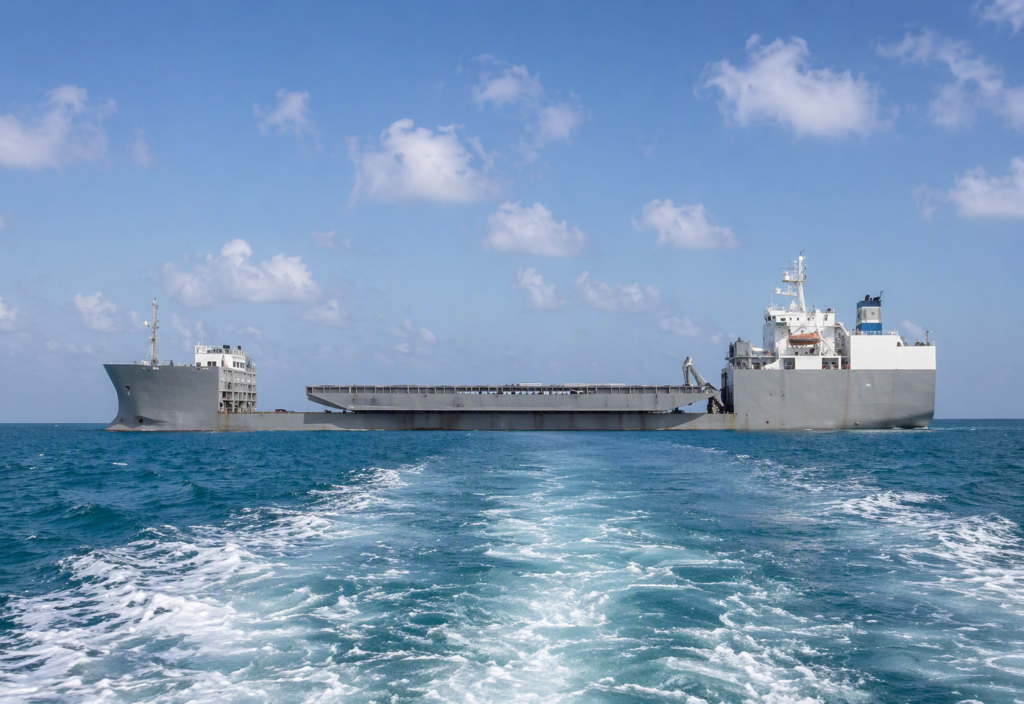
Dry transport of offshore assets on semi-submersible heavy lift vessels is one of the most complex and high consequence activities in the marine sector. These operations routinely involve assets worth hundreds of millions, long duration voyages, tight schedules, and exposure to environmental forces that cannot be controlled, only managed.
Yet when a dry transport is executed successfully, the Marine Warranty Surveyor is rarely visible. The asset arrives safely. The project moves on. And the preventive work that reduced risk is largely forgotten.
Having reviewed and approved hundreds of dry transports over the years, I have seen firsthand how meaningful the MWS role can be when it is properly understood and engaged early. The MWS is not simply there to approve calculations or satisfy insurance requirements. At its best, the MWS acts as an independent technical conscience for the project, focused on one thing above all else: ensuring that risks are understood, challenged, and reduced to the lowest practical level.
Where Dry Transports Really Fail
Many dry transport failures do not originate from poor engineering or lack of competence. They arise from optimistic assumptions, incomplete checks, or design decisions driven more by convenience and cost than by true risk exposure.
Transportation manuals are often well prepared and professionally presented. However, they can sometimes rely on default checks, simplified load cases, or assumptions that have been carried forward from previous projects without being fully reevaluated. This is particularly true for complex cargo arrangements, unusual hull forms, or non-traditional assets.
The MWS provides an independent review of these assumptions. That independence is critical. Unlike contractors or owners, the MWS does not benefit from a shorter route, a quicker loading operation, or a reduced fabrication scope. This allows the MWS to challenge decisions that may appear reasonable commercially but carry hidden technical risk.
Cargo Arrangement Is Rarely Just a Logistics Issue
One recurring example is the dry transport of deck barges. These types of vessels are often proposed to be loaded transversely across the deck of a heavy lift vessel. On paper, this can simplify loading operations and reduce time alongside. In practice, it can significantly increase exposure.
Large transverse overhangs restrict route options and may eliminate canal transits, forcing vessels onto longer routes with harsher sea states. They also increase the likelihood of cargo immersion, slamming, and uplift forces, particularly at the bow and stern.
In multiple cases I have reviewed, initial analyses suggested that uplift was not a concern, based on simplified pressure checks. A deeper review showed that buoyancy effects during wave immersion had not been properly accounted for. This is exactly the type of gap that an MWS is well placed to identify.
By working with the contractor and owner, alternative arrangements can be developed. Stowing barges longitudinally, stacking them, or adjusting loading sequences often reduced overhang and exposure significantly. These solutions were rarely free of cost. They sometimes required deeper water ports, additional towing operations, or temporary modifications to the barges themselves. However, when viewed against the potential cost of cargo damage or loss, they consistently proved to be the right decision.
Light Structures Demand Different Thinking
Liftboats and self-elevating platforms present a different but equally important set of challenges. These units are often light relative to their size, with high centres of gravity and hulls designed for limited afloat operation in benign conditions.
A common proposal to counter uplift during transport is to add ballast water. While this approach may be appropriate for conventional ships or barges, it can be problematic for liftboats. These structures are not always designed to carry large ballast loads while partially supported on cribbing in heavy seas.
Often, adding ballast only introduces additional risks rather than reducing existing ones. Hull plating, internal structure, and spud cans can be exposed to stresses they were not designed to withstand. Furthermore, if cracks form and ballast is lost during the voyage, the resulting uplift could be sudden and catastrophic.
An alternative approach, often recommended by the MWS, is to remove ballast entirely and instead design positive uplift restraint systems using steel wires or chains. This solution requires additional fabrication and installation time, but it eliminates both uplift risk and the potential for hull damage due to ballasting.
Small Changes Can Prevent Big Failures
Another area where MWS input consistently adds value is in seafastening arrangements. For assets with complex hull forms, seafastenings are sometimes clustered in locations that are convenient rather than optimal.
Even when calculations indicate adequate capacity, the physical arrangement can allow unintended load paths. In more than one case, I have seen that simply relocating a seafastening forward, or inside a leg well when overhang is present, eliminates a rotational mechanism that could otherwise have led to progressive seafastening overload and failure. These are not dramatic design changes. They are practical interventions grounded in experience and an understanding of how structures behave at sea.
The Uncomfortable Conversations
It would be unrealistic to pretend that all MWS recommendations are welcomed without resistance. They can introduce cost, delay, or additional scope. Asset owners may question whether the measures are truly necessary. Contractors may feel constrained by commercial commitments.
These discussions can be challenging, but they are also where the integrity of the MWS role matters most. Recommendations must be well researched, technically defensible, and clearly explained. When they are, the conversation shifts from compliance to risk ownership.
In my experience, even where there is initial frustration, the outcome is almost always positive. Damage free delivery changes perceptions very quickly.
Early Engagement Changes Everything
The most successful dry transports I have been involved in share a common feature: early engagement of the MWS.
When the MWS is brought in after key decisions have already been made, options are limited and tensions increase. When the MWS is engaged early as part of the project team, risks are identified sooner, solutions are more efficient, and trust is established.
The MWS is not there to say no. The MWS is there to help projects succeed without incident.
In an industry where a single failure can carry enormous financial, reputational, and safety consequences, the Marine Warranty Surveyor remains one of the most effective tools we have to turn complex dry transports into predictable and successful outcomes.
Often quietly. Almost always decisively
Conclusion
As offshore transportation projects grow in scale and complexity, the need for independent technical assurance becomes increasingly important. Early engagement of the MWS allows risks to be identified sooner, solutions to be developed collaboratively, and critical decisions to be made with greater confidence.
At Global Maritime, our Marine Warranty Surveyors combine technical expertise with practical operational experience to support clients across every stage of marine transportation. Working closely with owners, contractors and insurers, we provide independent assurance and clear, pragmatic advice that supports safe, efficient and reliable project delivery.
Whether reviewing transport methodologies, assessing seafastening arrangements or challenging assumptions early in the process, the objective remains consistent: reducing risk and enabling complex marine operations to be delivered with confidence.
Discover our Marine Warranty capabilities here: Marine Warranty – Global Maritime